1. Product advantages
①Removable;
②Flexible disassembly and assembly, the corresponding speed is extremely fast;
③Not inferior to the strength of concrete
④Customizable product appearance(Wood grain、Marbling)
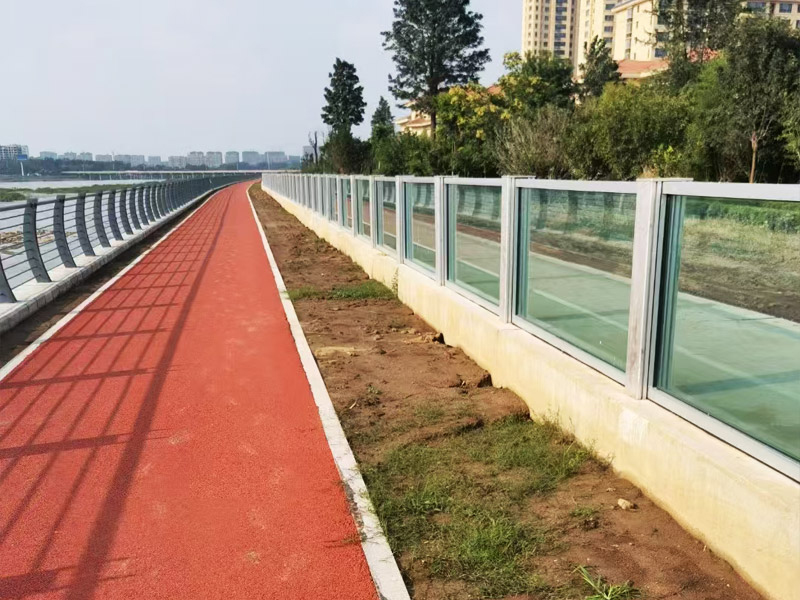
⑤Meet residents' hydrophilicity,Does not affect the surrounding landscape engineering
⑥Excellent flood control performance(With side posts)
2. Product introduction
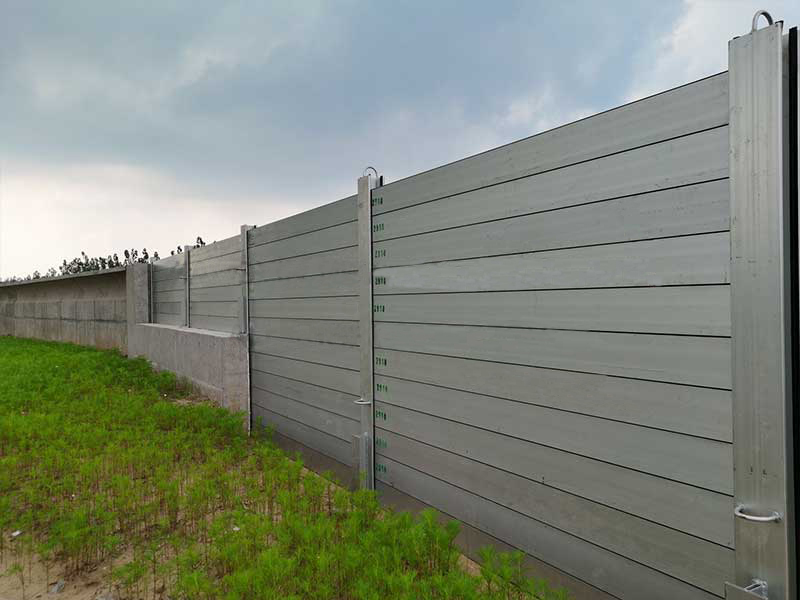
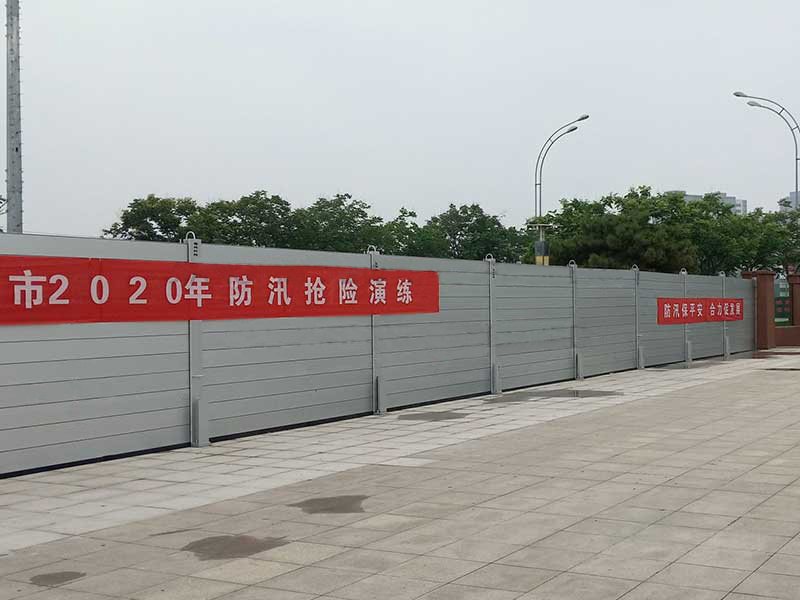
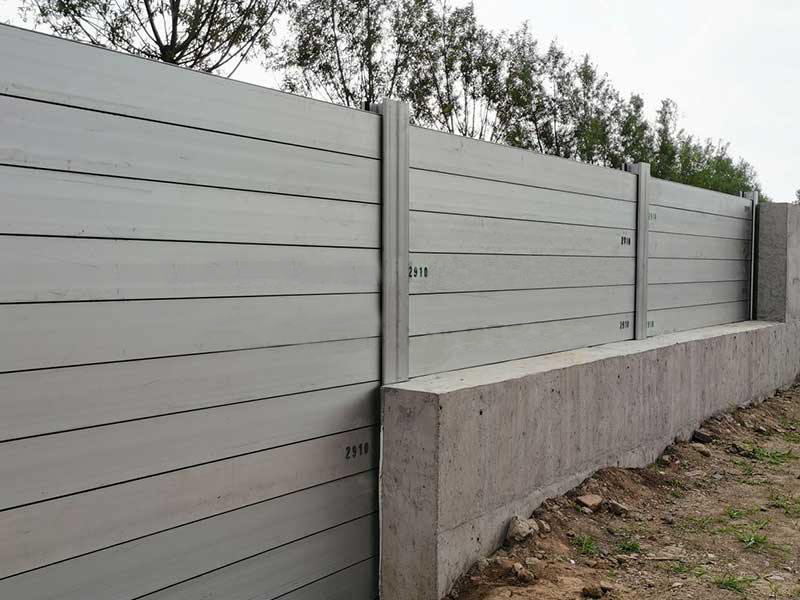
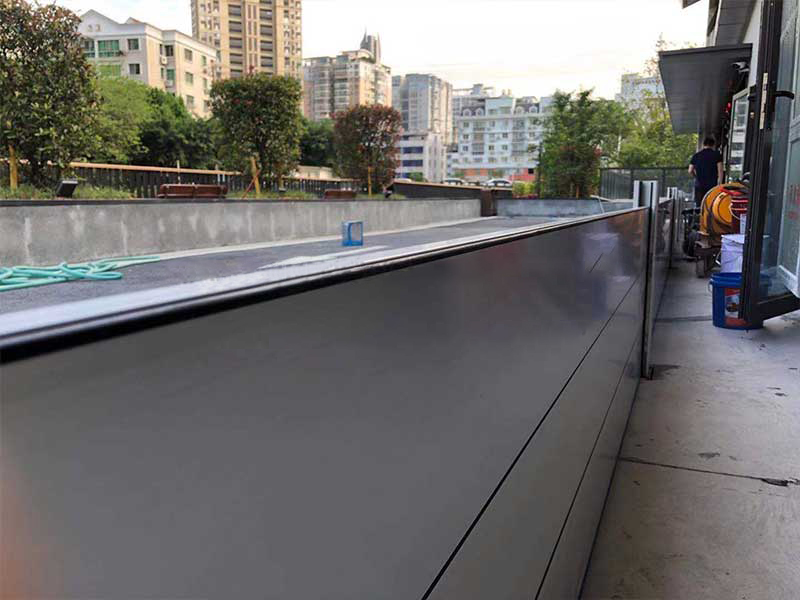
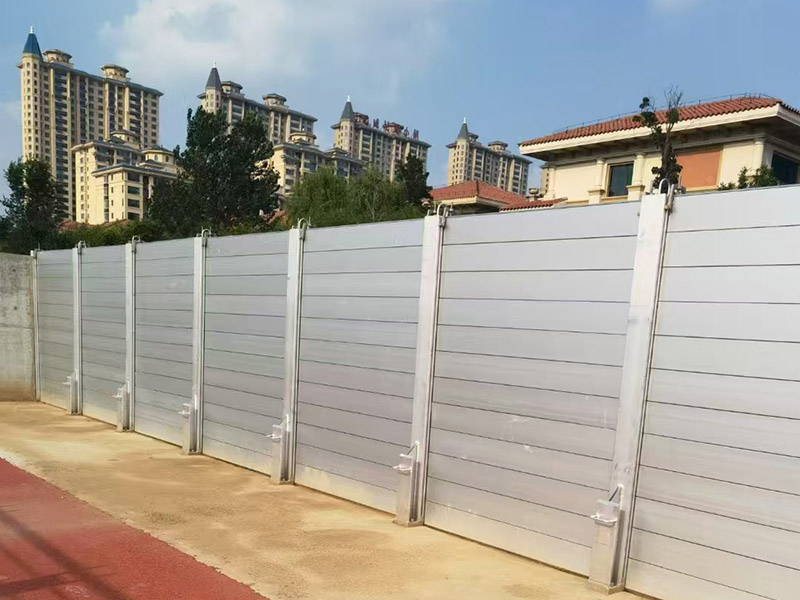
Aluminum alloy detachable flood control wall used in water conservancy projects is mainly used for protecting mountains, lakes or urban waterlogging. By using the advantages of high strength and light weight brought by aluminum alloy material, an effective protective wall is erected. Compared with the traditional concrete water retaining wall of irreversibility, unsightly, directly block the hydrophilicity of residents and other shortcomings, aluminum alloy protection system is very good to make up for these requirements. There are many precedents in China. In the future, this kind of aluminum alloy flood wall with convenient disassembly and wide application will be more popular

Product Composition
The product composition can be roughly divided into five parts: column (including side column), baffle, embedded parts, tight
Firmware and seals are shown in the picture

①: Side column
The material of the side pillars is 6063 series aluminum alloy, which is sent to the construction site after processing steps such as extrusion, aging, oxidation and striping

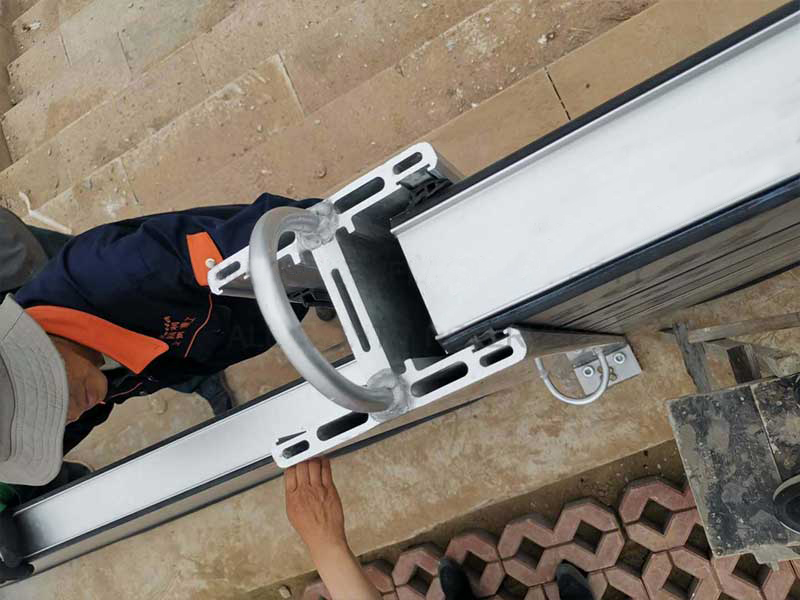
②: Column
The main body of the column is extruded from 6063 series and 6005 series aluminum alloy, and then through aging to increase its strength, sawing
After sending it to the outside for processing, each column can be split into three parts, which are composed of a column, a column base and a reinforcing rib.
Part of it is done through welding and machining steps. The welding method is particularly important, and the products all adopt the welding method of argon arc welding
Method, each weld has three welds. The strength of the column is the overall strength of the aluminum alloy flood control wall.
Through the use of M24 galvanized bolts and ground embedded parts to ensure its safety and stability.


③: Baffle
The baffle is made of 6063-T6 aluminum alloy, and the height of a single block is 200 mm. According to the model of the column used, the thickness varies from 30-100mm, the wall thickness varies from 1.6-2.5mm, and the interior is a cavity structure.

④: Embedded parts
The embedded part is composed of a top plate, a sleeve, a screw and a bottom plate. The top plate and the sleeve are made of 304 stainless steel, and the screw bottom plate is carbon steel. The surface of the top plate is generally flush with the surface of the concrete foundation, and the bottom plate is with the screw and concrete foundation.
The steel bars are welded together and integrated with the foundation. During non-flood seasons, M24 stainless steel protective screws can be used to screw into the embedded parts to ensure that no sand will enter the thread.

⑤: Lock (fastener) ⑥: Seal
The lock is the down-press fastener, and its main function is to create down pressure for the baffle installed in place. The fastener body material seals can be divided into: vertical column sealing strip, baffle sealing strip, bottom water-stop sponge. Neutral
It is made of aluminum alloy and stainless steel. After the baffle is placed at a specified height, the column and baffle are locked by the down press to ensure the water-stop performance at the bottom of the baffle.

⑥: Seal
The lock is the down-press fastener, and its main function is to create down pressure for the baffle installed in place. The fastener body material seals can be divided into: vertical column sealing strip, baffle sealing strip, bottom water-stop sponge. The middle stand is made of aluminum alloy and stainless steel. After the baffle is placed at the specified height, the vertical seal of the column and the baffle column are locked by the down-press fasteners. The material of the baffle seal is EPDM, and the water-stop sponge is PE Material. The water stop sponge can be compressed to compensate for the unevenness of the ground and effectively prevent the intrusion of bottom water.


 EN
EN